Modeling & Texture
Play dough, clay, or even homemade salt dough. Pressing, rolling, and stretching strengthens the intrinsic muscles of the hand. This is the foundation for the strength needed to hold a pen later.
Discover how every small gesture of your child shapes the contours of their future independence. A journey to the heart of precision, touch, and discovery.
Fine motor skills differ from gross motor skills by the scale of their movements. While gross motor skills use large muscle groups for running, jumping, or climbing, fine motor skills focus on the short, precise muscles of the hands, wrists, and fingers.
In 2026, neuroscience confirms more than ever that manual dexterity development is intrinsically linked to cognitive maturation. Each time your child grabs a breadcrumb or tries to button their cardigan, their brain creates thousands of new synaptic connections. This is a fundamental skill that directly impacts daily independence and, later, success in school learning such as drawing and writing.
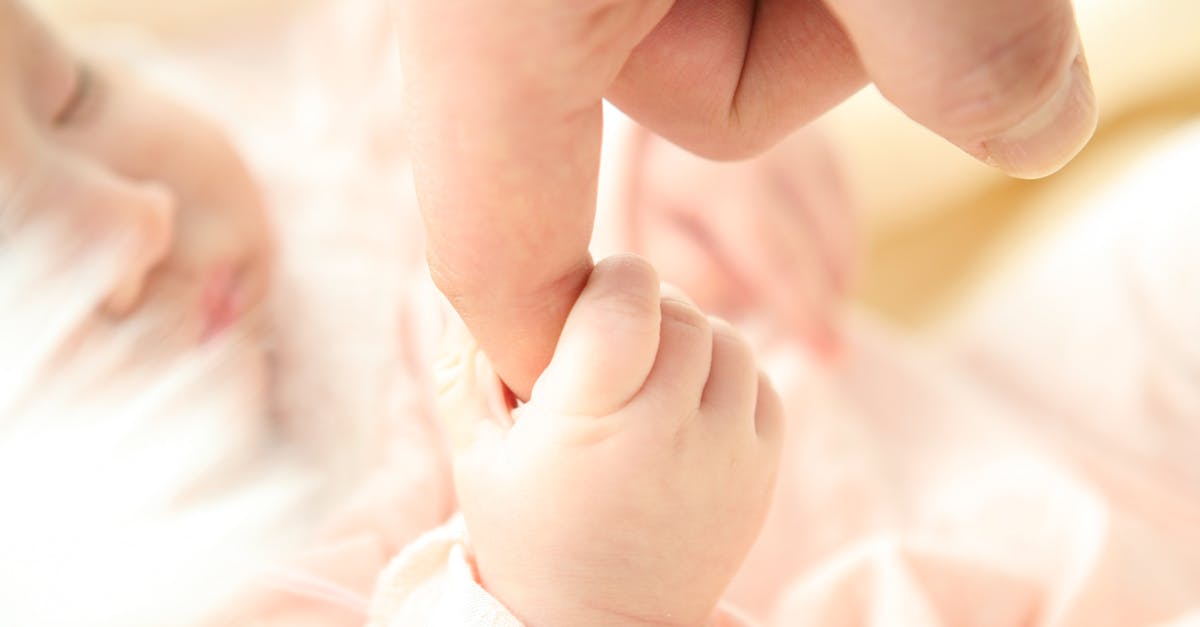
The hand is dominated by archaic reflexes, notably grasping (prehension reflex). Baby involuntarily squeezes everything that touches their palm.
This is the era of voluntary grasping. Your child begins to coordinate their gaze with their gesture to catch a rattle.
The major evolution: the pincer grasp. The child begins to use the thumb and index finger separately to pick up small items.
Fine motor skills are not a monolithic concept. They are broken down into seven distinct abilities that work in harmony to allow complex manipulation of the world around us.
The arm movement to direct the hand toward the object, guided by vision.
The act of seizing. It evolves from the palm toward the fingertips (fine pincer grasp).
Maintaining the object while moving the arm through space.
Motor development follows a "proximo-distal" law: from the center toward the extremities.
Learning to let go is as complex as learning to catch!
Select your child's age to discover the most suitable fine motor activities in 2026.
No need for expensive equipment. The home is an infinite experimental field.
Play dough, clay, or even homemade salt dough. Pressing, rolling, and stretching strengthens the intrinsic muscles of the hand. This is the foundation for the strength needed to hold a pen later.
Inspired by Montessori pedagogy, transferring seeds, rice, or water from one container to another works on wrist precision and bilateral coordination.
Discover our awakening guides →Threading large beads, then smaller ones, teaches the child to stabilize their dominant hand while using the other as support. A major concentration challenge.
Every child develops at their own pace. However, some persistent signs may indicate a need for specific support (occupational therapy or psychomotricity).
"An early assessment with a specialist can transform daily frustration into a series of small victories."
The famous method encourages the use of tools adapted to the child's size: small pitchers, short-handled brooms, kitchen tongs. The goal? That the hand serves the intelligence.
Also known as "Busy Boards," they bring together locks, buttons, zippers, and gears on a single support. It is the ultimate tool for exploring all facets of fine motor skills safely.
A timeless recipe: 1 part salt, 2 parts flour, 1 part lukewarm water. Add natural dyes (turmeric, beetroot) for a complete sensory awakening.
Fine motor skills are not the exclusive domain of childhood. Throughout life, they can be maintained or rehabilitated. Knitting, surgery, watchmaking, or even video games stimulate this brain plasticity. For seniors, maintaining dexterity is a guarantee of maintaining autonomy and preventing cognitive disorders.